Puerto Rico punches far above its weight as a wildlife destination. The island's 3,500 square miles support over 350 bird species, 17 species of native coquí frogs, three species of nesting sea turtles, wild horses on a separate island offshore, and some of the Caribbean's most accessible marine life. For a US territory where you don't need a passport, the biodiversity is extraordinary — and much of it is visible on guided tours or independent visits to the island's protected reserves. Tours you can book here →
Birds: 350+ Species, 35 Endemic
Puerto Rico has 35 bird species found nowhere else on Earth. The Puerto Rican parrot (Amazona vittata) is the most famous — critically endangered, with a wild population that dropped to 13 birds in 1975 before a USFWS recovery program began to rebuild it. Today fewer than 500 wild Puerto Rican parrots remain, concentrated mainly in El Yunque National Forest (northeast) and Río Abajo State Forest (northwest). The aviaries at both locations sometimes allow views of captive-bred birds awaiting release. Sightings of wild parrots are rare but possible on guided El Yunque rainforest tours.
More reliably visible endemic birds include the Puerto Rican spindalis (reinita mora), a colorful tanager-like songbird found in forests island-wide; the Puerto Rican lizard-cuckoo (pájaro bobo mayor), a long-tailed, ground-hunting bird that stalks lizards in forest understory; and the Puerto Rican screech-owl (múcaro), heard in forests after dark. The northeast coast's mangrove systems host year-round populations of herons, egrets, and the spectacular roseate spoonbill, whose pink color intensifies with age, especially in southwest Puerto Rico near La Parguera.
For serious birders, Bosque Estatal de Guánica (the dry forest UNESCO Biosphere Reserve on the southwest coast) is one of the most important bird habitats in Puerto Rico, supporting 13 of the island's endemic species in close proximity. Guánica Dry Forest is a very different ecosystem from El Yunque — dusty, succulent, and alive with sound.
El Yunque guided tours give you the best chance of spotting Puerto Rico's endemic birds with an expert naturalist.
See El Yunque Tours →Book it: tours for this trip
Culebra Island Aquafari (with Ferry Tickets) (Kayaking Puerto Rico)
Company: Kayaking Puerto Rico · Location: Ceiba · From: $109
Check Availability →Full Day Snorkeling and Boat Experience (Pirate Snorkeling Shack)
Company: Pirate Snorkeling Shack · Location: Fajardo · From: $1,050
Check Availability →Glowing Bio Bay Kayak Adventure (Island Kayaking Adventure)
Company: Island Kayaking Adventure · Location: Fajardo · From: $65
Check Availability →Sea Turtles: Three Nesting Species
Three species of sea turtle nest on Puerto Rico's beaches: leatherback, hawksbill, and green. Leatherbacks are the largest reptile on Earth — females can exceed 7 feet in length and 1,500 pounds. They nest on Puerto Rico's beaches from March through July, with peak nesting in April and May. Critically endangered globally, leatherbacks have nesting beaches in Fajardo, Culebra, Vieques, and the northwest coast near Rincón and Isabela.
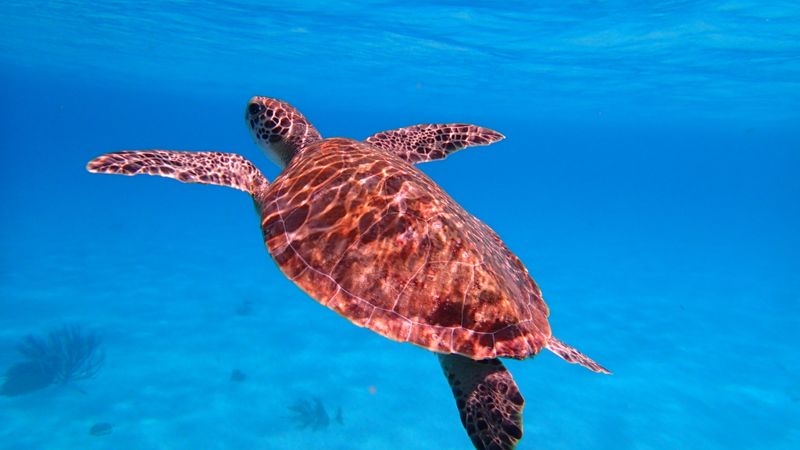
Hawksbill turtles, also critically endangered, nest April through November on Puerto Rico's beaches. They are more commonly encountered while snorkeling — their distinctively hooked beak (adapted for sponges) and orange-streaked shells make them unmistakable. Green turtles are the most abundant nesting species in Puerto Rico, using beaches island-wide from July through October. Green turtles are also the most commonly seen while snorkeling, grazing on seagrass beds in shallow bays.
Organized turtle-watching tours operate under USFWS and DRNA permits, typically departing at night to observe nesting females without disturbing them. Flashlights are not permitted — guides use red-light headlamps. Approaching, touching, or following turtles without a permitted guide is illegal and harmful.
Wild Horses of Vieques
Vieques Island, eight miles southeast of the main island, is home to approximately 2,000 semi-wild horses (paso fino and mixed breeds) that roam freely across the former US Navy base lands now managed as the Vieques National Wildlife Refuge. Horses wander through town, onto beaches, and through the wildlife refuge wetlands. Sightings are virtually guaranteed if you spend any time on the island. Vieques wild horses are descended from Spanish colonial breeding stock, some over 500 years of lineage on the island.
Marine Life: Snorkeling and Diving Encounters
Puerto Rico's coral reefs support an accessible and diverse cast of marine species. On any guided snorkeling tour, you are likely to encounter hawksbill and green sea turtles (these are the same nesting species seen on beaches — seeing them underwater feeding is a different experience entirely), multiple parrotfish species including the spectacular stoplight parrotfish, queen angelfish, French angelfish, spotted eagle rays, and schools of blue tang.
Nurse sharks rest motionless on sandy bottoms under coral ledges — harmless to snorkelers but alarming to those who don't know to expect them. Caribbean reef sharks are present on outer reef edges but rarely encountered on casual snorkeling. In deeper waters, sperm whale encounters are occasionally reported by dive operators on the north coast, where the Puerto Rico Trench begins just offshore.
Vieques is the best single destination for wildlife diversity in Puerto Rico — wild horses, sea turtles, birds, and bioluminescence.
See Vieques Tours →Coquí Frogs: Puerto Rico's Unofficial National Symbol
The coquí (named for its two-note call: co-QUEE) is the most iconic sound of Puerto Rico. Puerto Rico has 17 native coquí species, ranging from thumbnail-sized to golf-ball-sized, living in habitats from coastal mangroves to mountain rainforest. The common coquí (Eleutherodactylus coqui) is found at virtually every elevation island-wide and calls from dusk to dawn wherever there is moisture and vegetation. El Yunque is the best place to hear and sometimes see multiple species on a single night walk.
Guided kayak tours in mangrove forests offer outstanding birdwatching alongside the paddling.
See Kayaking Tours →