There are fewer than a dozen truly bioluminescent bays in the entire world where the water glows brightly enough to see with the naked eye. Puerto Rico has three of them — more than any other place on Earth. The island holds the world-record brightest (Mosquito Bay in Vieques), the most accessible (Laguna Grande in Fajardo, a 45-minute drive from San Juan), and the only one where motorized boat tours are permitted (La Parguera in Lajas). Understanding what causes this phenomenon — and why Puerto Rico has been so fortunate — deepens the experience of seeing it. Tours you can book here →
The Organism: Pyrodinium bahamense
The light in Puerto Rico's bioluminescent bays is produced by a single-celled marine organism: Pyrodinium bahamense, a type of dinoflagellate (a photosynthetic plankton). The name means "rotating fire beast" in Greek — a reference to the helical swimming motion of the cell, visible under a microscope, and the bioluminescent glow it produces.
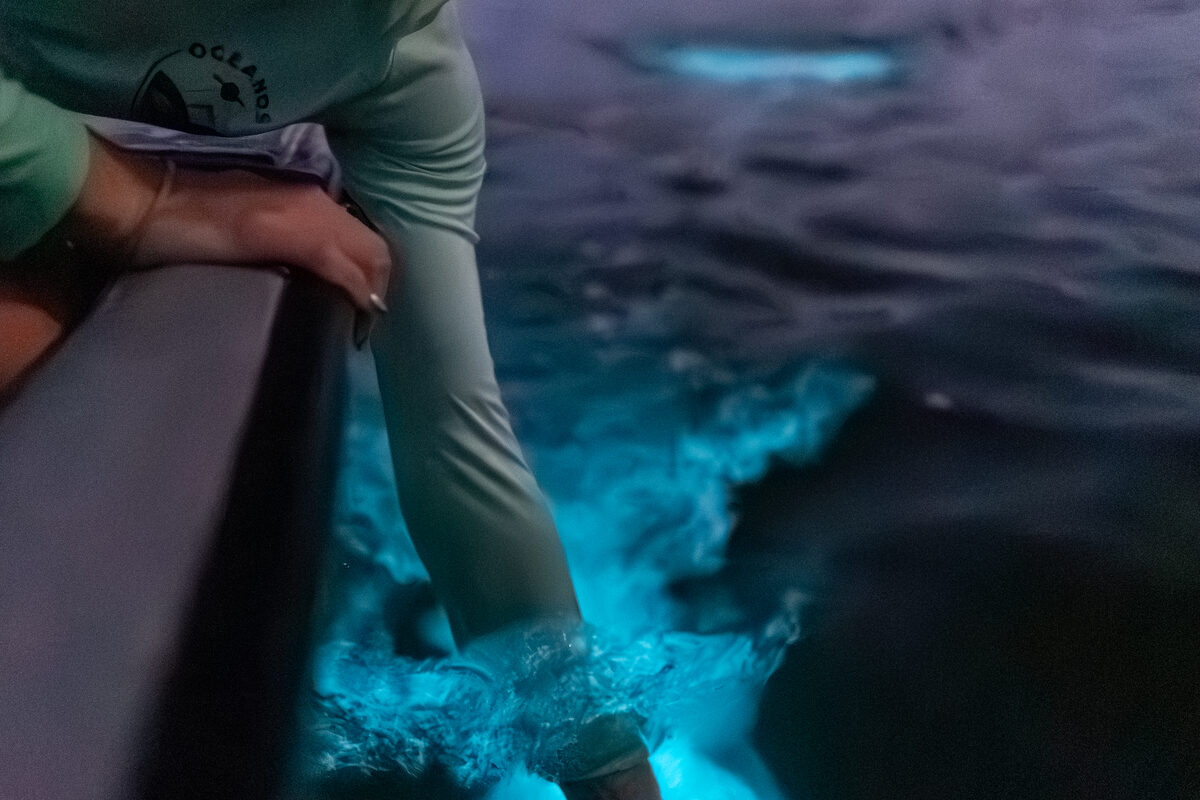
Pyrodinium bahamense lives suspended in the water column, measuring about 0.04 millimeters — invisible individually, but present in concentrations of up to 700,000 cells per gallon of water in the brightest bays. Each cell produces a brief burst of blue-green light (peak wavelength approximately 475 nanometers) when mechanically disturbed. A wave, a paddle stroke, a fish tail, your hand moving through the water — any disturbance triggers the reaction. The glow lasts about 100 milliseconds per cell, but with hundreds of thousands of cells being disturbed simultaneously, the visual effect is continuous and spectacular.
Book it: tours near Bio
Bio Bay Kayak Tour (Kayaking Puerto Rico)
Company: Kayaking Puerto Rico · Location: Fajardo · From: $70
Check Availability →Glowing Bio Bay Kayak Adventure (Island Kayaking Adventure)
Company: Island Kayaking Adventure · Location: Fajardo · From: $65
Check Availability →Bio Bay Night Kayaking Tour Laguna Grande, Fajardo, P.R. (Eco Action Tours)
Company: Eco Action Tours · Location: Fajardo · From: $54
Check Availability →The Chemistry: Luciferin and Luciferase
The light-producing reaction uses the same basic biochemical mechanism as a firefly. The key molecules are luciferin (a light-emitting compound) and luciferase (an enzyme that catalyzes the oxidation of luciferin). When oxygen reacts with luciferin in the presence of luciferase, the reaction releases energy as visible light rather than heat — cold light, technically called chemiluminescence triggered by mechanical disturbance.
This mechanism evolved independently multiple times across the tree of life — in fireflies, deep-sea fish, anglerfish, certain fungi, marine bacteria, and dinoflagellates. In Pyrodinium bahamense, the leading hypothesis for the evolutionary function is predator deterrence: the sudden flash of light when the cell is disturbed by a small predator (like a copepod) attracts larger predators that eat the copepod — a "burglar alarm" effect. The cell sacrifices a little energy to illuminate the threat, hoping a bigger fish will investigate.
Book a guided kayak tour to experience bioluminescence at Laguna Grande in Fajardo — the most accessible bio bay from San Juan.
See Bio Bay Tours →Why Puerto Rico Has Three Glowing Bays
Not all coastal lagoons develop bioluminescent populations. The conditions that allow Pyrodinium bahamense to reach concentrations high enough to produce visible glow are very specific and difficult to replicate:
Restricted water exchange. All three Puerto Rico bio bays have narrow channels connecting them to the open sea. This prevents the high-concentration water from being flushed out and diluted by every tidal cycle. The organisms accumulate rather than dispersing. Without the narrow inlet, you get a normal lagoon with normal, non-luminescent dinoflagellate concentrations.
Mangrove-lined shores. Red mangroves fringe all three bays. Their fallen leaves decompose into tannins and other organic compounds that lower the water pH and add nutrients to the water column — the specific chemical environment that Pyrodinium bahamense thrives in. Remove the mangroves and you change the water chemistry enough to suppress the population.
Warm, shallow water. The bays are all relatively shallow (6–20 feet maximum depth) and warmed by tropical sun. Pyrodinium bahamense reproduction peaks in warm water. Puerto Rico's position at 18° N latitude keeps water temperatures in the 80–86°F range year-round.
Stable salinity. The bays need moderate salinity — saltier than fresh water but slightly lower than open ocean. The mangroves and restricted inlets buffer against both rainwater freshening and over-salination.
Puerto Rico's Three Bioluminescent Bays Compared
Mosquito Bay, Vieques holds the Guinness World Record for highest concentration of bioluminescent organisms: up to 720,000 Pyrodinium cells per gallon. The bay is a small, enclosed lagoon accessed through a narrow channel lined with red mangroves. Non-motorized kayaks are required — motorized props damage the organisms. The remoteness of Vieques (requiring a ferry from the main island) and the absolute darkness on clear nights makes this the most otherworldly experience. On a moonless night, glowing dolphins have been observed swimming in the bay, each trailing a comet-like wake of light.
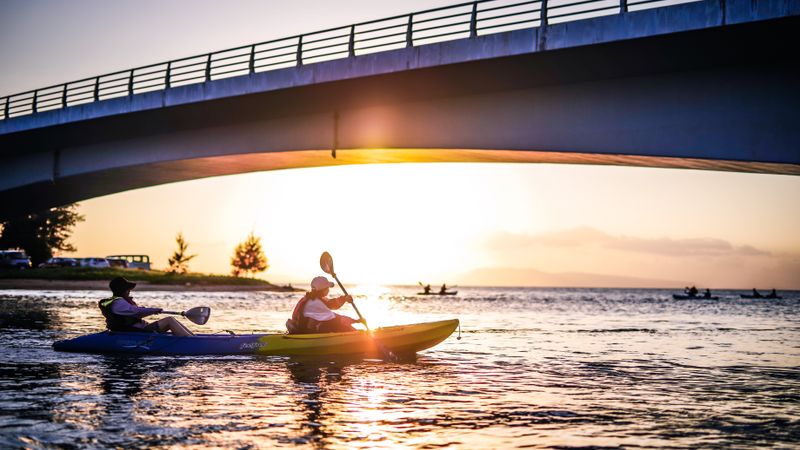
Laguna Grande, Fajardo is inside Las Cabezas de San Juan Nature Reserve. Kayak tours depart at night, paddle through a narrow mangrove tunnel in total darkness (red-light headlamps only), and emerge into the open lagoon. The concentration is lower than Vieques but still produces vivid, visible glow — reaching in with your hand produces a glowing swirl. Laguna Grande is the most popular bio bay tour for visitors from San Juan due to its short drive and regular tour availability. Full comparison of all three bays here.
La Parguera, Lajas is the southwest bay where motorized boat tours are permitted — the only bio bay in Puerto Rico where this is allowed. This makes it accessible to people who cannot kayak. The glow is generally considered less bright than Vieques or Laguna Grande, but the experience is still remarkable. The surrounding area has excellent daytime snorkeling and a bohemian fishing village atmosphere.
Mosquito Bay on Vieques holds the world record for bioluminescent brightness. Book a Vieques island tour.
See Vieques Tours →Best Conditions for Viewing
The single biggest factor in bio bay visibility is the moon phase. Bioluminescence is always present — the organisms don't stop glowing — but competing ambient light from the moon drowns out the glow. A new moon (no moon in the sky) produces the darkest conditions and the most visible blue-green light. A full moon makes the glow barely perceptible. Book your tour as close to the new moon as possible for the best experience. Most operators publish their tour calendars with moon phases annotated.
Rainfall affects visibility differently: heavy rain temporarily dilutes salinity and can suppress the organisms, but normal rain has minimal effect. Bring a mosquito repellent for mangrove areas at night.