Background
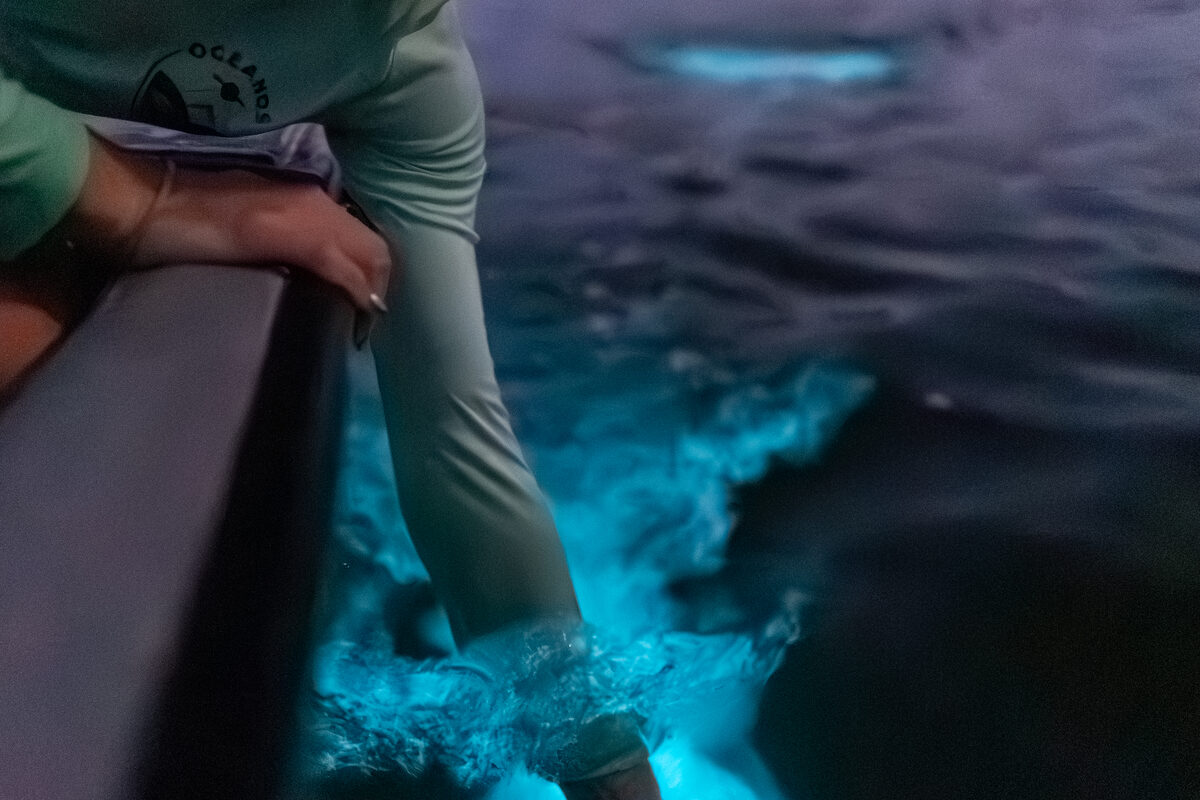
Puerto Rico has three bioluminescent bays—Laguna Grande in Fajardo, Mosquito Bay in Vieques, and La Parguera in Lajas. Each is produced by the same organism: Pyrodinium bahamense, a single-celled dinoflagellate that emits blue light when mechanically disturbed. Every paddle stroke, every wave, every movement in the water triggers a cascade of cold blue light that makes the water look like it's glowing from within. The three bays differ significantly in brightness, accessibility, experience type, and what operators are available to take you there.
This guide compares all three bays directly and covers the main tour operators at each location. If you're planning a trip and trying to decide which bio bay to book, read this first.
How Bioluminescence Works
The dinoflagellates in Puerto Rico's bio bays produce light through a chemical reaction involving luciferin—the same general mechanism as fireflies, though completely unrelated biologically. When disturbed, a specialized organelle called a scintillon in the cell membrane reacts to produce a blue flash lasting a fraction of a second. The bays glow because millions of these organisms flash simultaneously in response to water movement.
Brightness depends on three main factors: dinoflagellate concentration (cells per liter of water), water temperature and salinity, and ambient darkness. The moon cycle is the most controllable variable for tour planning—on new moon nights, the bays can be dramatically brighter than on full moon nights, where the ambient moonlight competes with the bioluminescence.
Chemical sunscreens harm the dinoflagellates. Operators ask guests to avoid sunscreen or use only reef-safe/mineral sunscreen for evening bio bay tours. This isn't just an ecological request—it also affects tour quality, since groups who've been swimming in sunscreen-laden water reduce the bay's brightness over time.
What to Bring to a Bio Bay Tour
- Dark clothing: Light-colored clothing reflects moonlight and reduces your ability to see the glow when you look at the water
- Bug spray: Mangrove areas have mosquitoes, particularly during the channel paddle at Laguna Grande and around La Parguera
- Reef-safe sunscreen only: Or skip sunscreen entirely for evening tours (you're not in daylight anyway)
- Water shoes: Some launch sites involve walking on rocky or muddy ground
- Phone in a dry bag: Phones and kayaks are a wet combination; waterproof cases are worth using
- Realistic photo expectations: Bioluminescence is very hard to photograph well without a tripod and long exposure settings. Most smartphone photos are disappointing. Experiencing it without trying to document it is generally more satisfying.
See also: Vieques Island Tours · Ponce Day Trips · Fajardo Boat Tours · Kayak Tours